
For various reasons, chickens became extraordinarily important. Not long after we moved in that spring, Dad and Mom bought two dozen baby chicks. 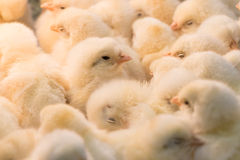 They put a large cardboard box on the floor of the little shed attached to the house. By cutting the sides down to about six inches the chicks were safely penned in.
To be sure they stayed warm through the night, Dad rigged a light on an extension cord so that it ran down through the hole in the bottom of a flower pot. He then turned the pot over and turned the light on. The pot became toasty warm. Indeed it did. The next morning he found that all the chicks that huddled closest to the pot had been toasted. Those farther out had pushed them against it. They weren’t in very good shape either.
After getting rid of the little dead bodies, they went to the feed store and bought another two dozen. This time Dad experimented with  a gooseneck lamp. He finally got a distance above the chicks that seemed comfortable to them.
The chicks slept, strutted, drank water and ate mash. I watched fascinated over the weeks as feathers began to show on their tiny wings. Soon the little roosters would stretch, flap and earnestly greet the world with lusty “gronks.”
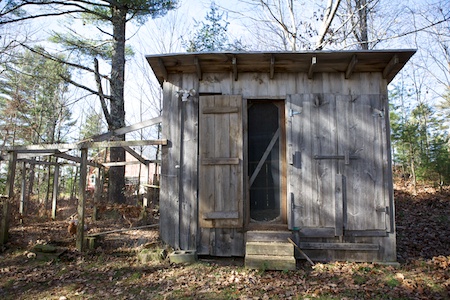 While the chicks grew in their cardboard home, Dad built a shed-like chicken house. For a floor he simply put a piece of plywood on the ground. Then he pounded into the ground the four corner posts.

Some relatively straight limbs worked as a roost. To get them we had to go to Aunt Jerry and Uncle Ted’s new place south of Alamo. Plenty of walnut trees grew there.
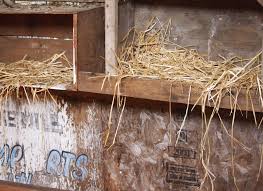
Nest boxes completed the structure.
“It’s not much for looks ,” I heard Dad tell Mom, “but its hell for stout.”
Once the chicks were old enough to fend for themselves, Dad shut them in the coop at night and let them outside during the day. Slowly the hens matured and began regularly to lay eggs in the boxes. Most of the hens. There seemed always to be one or two who decided the boxes were not for them. They’d make a nest for themselves somewhere in the weeds. Slyly they’d slip off and lay their eggs there, the preliminary sitting and then raising their own chicks. It became my job to frustrate them.
Beyond pulling out most of the grape vines, Dad did little to tend to the place. Weeds grew profusely. Yellow mustard, mainly.

Mustard stretched unbroken the field west of our place.

Around the chicken house it grew almost a tall as I was.
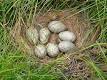
A wily hen would find a place in the mustard, make a nest and begin laying her eggs there. Each day, after laying, she’d return and announce her accomplishment with a “cut-cut-cut-kDAKit.” It would be up to me to watch in the morning to see where she came out of the mustard and begin her celebration. Only by seeing the tunnel into the mustard did I stand a chance of finding her nest and saving the eggs.
 donaldhaynes.com