
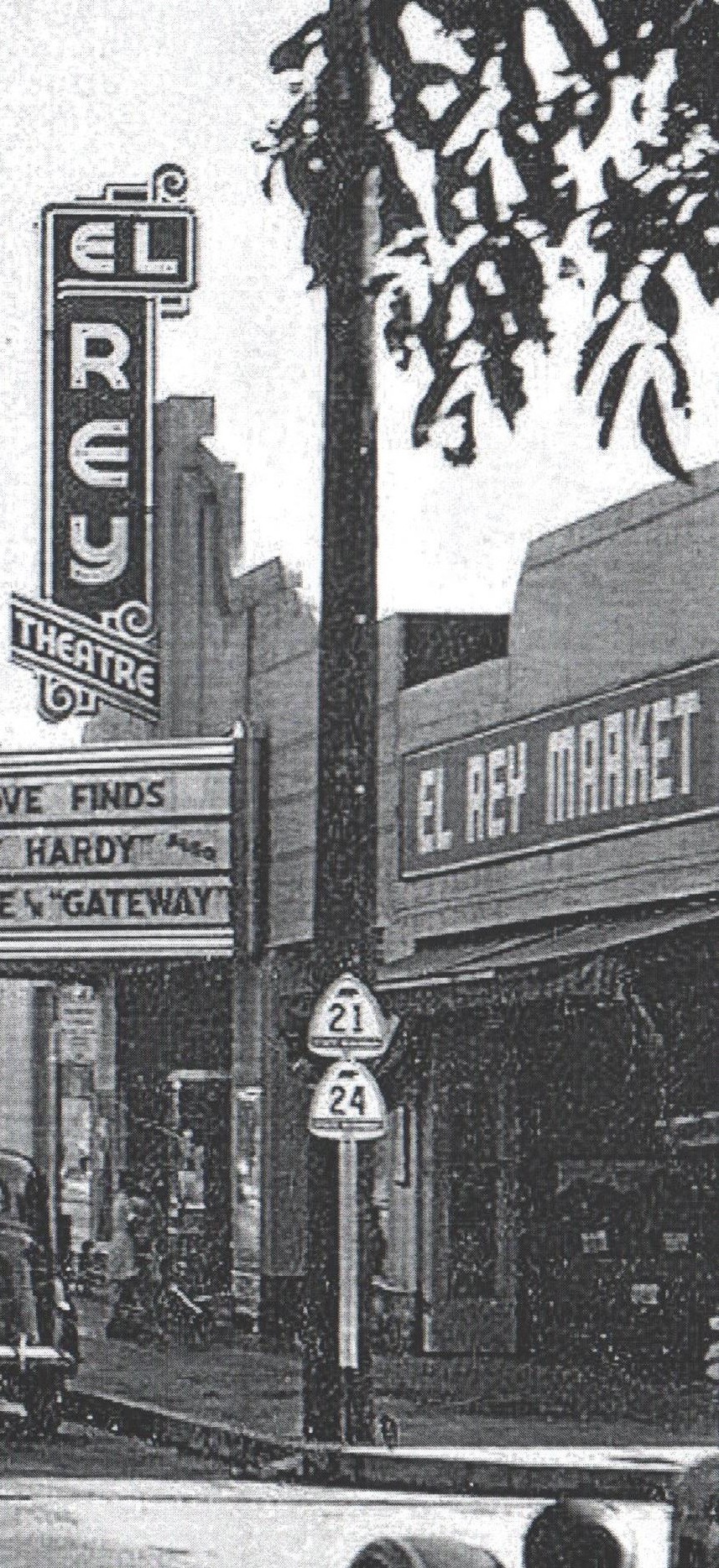
 It never occurred to me to question the fact that the same building housed the El Rey Movie Theater and the El Rey Grocery Store. It seemed part of the natural order of things. I never wondered where the name came from either.
The Market faced the street. An awning rolled out covering part of the sidewalk. The entire front wall folded into some sort of track, so that the produce section faced the sidewalk without any barrier. On one side rested a stack of baskets to put things in.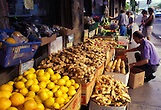 To enter the market, we passed by oranges and apples and carrots and potatoes. Mom spent time here. Since we did not have a refrigerator we shopped several times a week. She regularly bought fresh vegetables. Peas and string beans, usually. Potatoes. Maybe melons.
Once through the produce, Mom went to the meat department. It stood on the left. No packages here. Nothing prepared and shrink wrapped. Here trays of meat lay before my eyes. Since I was so short, I looked directly at  them.
them.
Sometimes a radio played. It sat on a shelf at the back of the butcher shop. Often it played the Sons of the Pioneers. “Drifting along with the tumbling tumble weeds.” Other beautiful songs.
The meat department played an important role in my vision of the world. On the trays before me lay the unambiguous reality. The world was divided into us and them, we and they. We bought hamburger. Chuck steak. Chuck roast. Sometimes round steak. Rich people didn’t. They bought sirloin steak. Rib steak. Cross rib roasts. They bought sliced bacon. We bought bacon by the slab. As the week went along Mom would slice off piece by piece. When the last had been cut off, the rind would simmer in the pot of pinto beans she usually served on Friday. This general split carried over to lunch at school. Rich kids ate pressed ham in their sandwiches. I ate bologna.

We were never far from the war effort. A poster above the butcher reminded us.
So much that fascinated as Mom continued to shop! The floor, for example. It was wood. To clean it one of the men put a scoop or two of what looked like red sand on it. 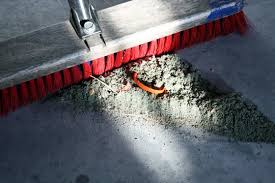 Then he’d use a push broom to go up and down the aisles. As a consequence the wood had long since changed color. Light, narrow veins alternated with darker wood where the compound had soaked in. I found this beautiful.
As we walked along the aisles the displays of canned goods fascinated me. All sorts  of things in cans. Mom rarely bought anything canned except occasionally Campbell’s soup. During the summer she canned all sorts of things. Fruits, mainly. When she cooked or baked, she did so from scratch.
She always bought coffee. Folgers. She’d take a pound can from the shelf and carefully check to be sure the metal key had been fastened to the top. Once home she’d insert a 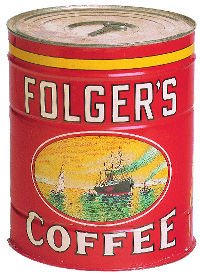 little metal tongue at the top of the can into a slot in the key and then wind round the top of the can. When she began there followed a satisfactory “woosch” as the vacuum broke. Smelled good, too.
 We’d always stop at the cereal display. I’d lobby for Wheat Chex or Rice Chex. You got secret agent things with them–decoder rings and pens.
  While now and again she might buy some of the other kinds, she always bought shredded wheat. Nabisco Shredded Wheat.
On the back, Shredded Wheat boxes had a picture of 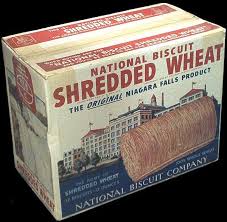 Niagara Falls. Blue. When we got home and it came time to open the box, I always stood on my chair at the counter in anticipation. Inside were three layers of four shredded wheat biscuits. No wax bag or such. A card separated each layer. Wonderful cards. I
 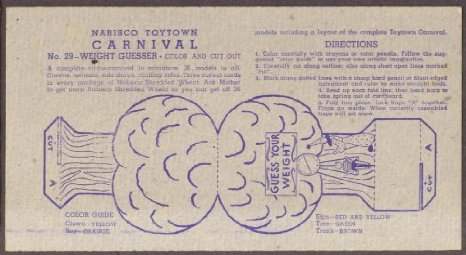 lusted after them. Puzzles. Games. Projects. Once when Mom was not looking I pillaged a newly opened box, taking out all the cards. Thereafter I was under strict orders. I only got the next card after I’d eaten the biscuits on top of it.
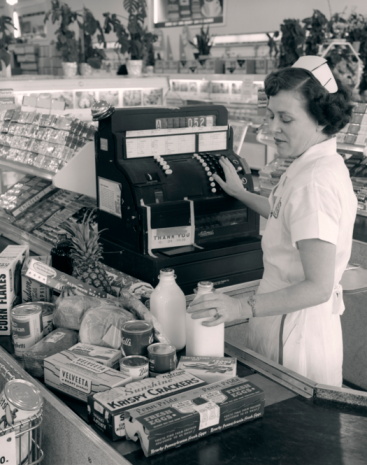 Once we’d worked our way through the store it came time to
 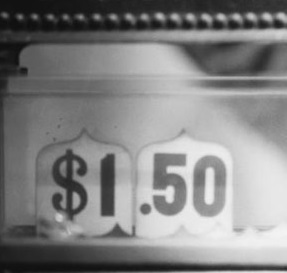 pay. We’d get in line and come to the woman at the cash register. Each item had its price stamped on it. One by one she’d take each out, punch in the cost and then cha-ching, the cash register would go and magically up would pop the figure. Once everything had been entered and totalled Mom would pay her. At the same time she’d give the lady our ration stamps. Then we’d go home.
 donaldhaynes.com