
December 7, 1941. Sunday morning The morning that fear came into my world. Mom and Dad are still at the breakfast table with Bill, my only brother, who had been born the autumn  before. I have gone out into the back yard. Near the rear there are hollyhocks. I stand next to them in the sunshine. The neighbor’s yard has trees. I like to come here where I can hear their radio. Music plays. Soft piano. Gentle. Abruptly an excited, urgent voice breaks in. “We interrupt this program to bring you a special bulletin. The Japanese have attacked Pearl Harbor . . .” I run across the back yard. Rush up the steps. Burst into the kitchen. “The Japs attacked Pearl Harbor” I breathlessly announce.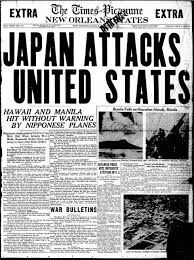
And so fear came into my world. We feared that the Japanese would repeat the “sneak attack” on Pearl Harbor here in the East Bay. Our response could soon be seen  everywhere. During the day festoons of barrage balloons tethered to cables hung over the city. The notion was that if a plane came in to bomb us, it would have to been 500 or 600 feet above the ground. Divebombing, after all, was all line of sight. So when a plane came in to drop its load, its wings would hit a cable. It would crash.
If they came in at night, they would look for the lights of the city to guide them. It became imperative that no lights be seen. 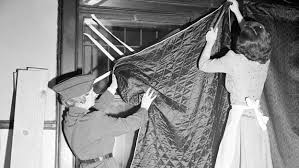 Every house had its blackout curtains. Every block had its air raid warden. Dad was ours. I would sit on the front steps and watch, every evening, as he left to circle the block, looking for windows that shown in the darkness. Street lights were turned off. Even traffic lights needed to be covered.
As time went on, the war came into focus. It had a beginning–Pearl Harbor. We were now in the middle, the fight to win. At some point in the future, the war would be over.
 donaldhaynes.com